Chinese Tea Ceremony: 4,700 Years, Rituals & Yunnan Origins
Chinese Tea Ceremony: 4,700 Years of History, Rituals, and the Birthplace in Yunnan
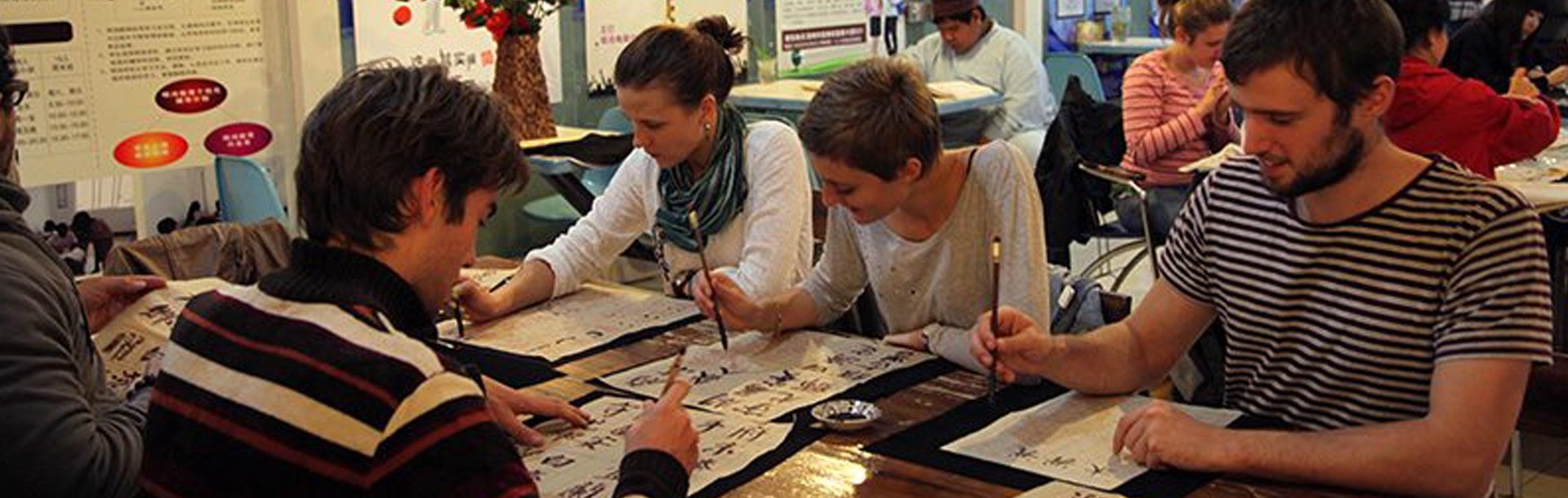 Chinese tea ceremony (中国茶道, zhōng guó chá dào) is one of the oldest continuously practiced cultural traditions in the world. From the legendary discovery of tea by Shen Nong nearly 4,700 years ago to the gongfu cha ceremonies still performed in homes and tea houses today, tea has shaped Chinese aesthetics, philosophy, and daily life across forty-seven centuries.
If you are studying Chinese in Kunming, you are studying in the historical heartland of tea itself. Yunnan Province is where wild tea trees first grew, where Pu'er tea is produced, and where some of China's oldest tea traditions are still practiced by Bai, Dai, and other ethnic minority communities. Tea is not a museum piece here — it is part of daily life.
Chinese tea ceremony (中国茶道, zhōng guó chá dào) is one of the oldest continuously practiced cultural traditions in the world. From the legendary discovery of tea by Shen Nong nearly 4,700 years ago to the gongfu cha ceremonies still performed in homes and tea houses today, tea has shaped Chinese aesthetics, philosophy, and daily life across forty-seven centuries.
If you are studying Chinese in Kunming, you are studying in the historical heartland of tea itself. Yunnan Province is where wild tea trees first grew, where Pu'er tea is produced, and where some of China's oldest tea traditions are still practiced by Bai, Dai, and other ethnic minority communities. Tea is not a museum piece here — it is part of daily life.
Origins: Shen Nong and the Discovery of Tea
According to Chinese tradition, tea was discovered by the legendary Emperor Shen Nong (神农, "Divine Farmer") around 2737 BCE. Shen Nong, said to have tasted hundreds of plants to identify medicinal herbs, is credited with discovering tea when leaves blew into his pot of boiling water. Whether or not the legend is literal, archaeological evidence confirms that tea has been consumed in southwest China — including modern-day Yunnan — for at least 4,000 years. Early tea was used as medicine, not as a daily beverage. The leaves were chewed, boiled into bitter decoctions, or compressed into cakes for storage. Tea served as a stimulant, a digestive aid, and a treatment for various ailments. The transition from medicine to beverage took over two thousand years.Han Dynasty: Tea Becomes a Beverage (206 BCE – 220 CE)
During the Han Dynasty, tea spread from southwest China into the Yangtze River basin and gradually became a beverage, though it was still considered a luxury. Tea bricks — pressed cakes of tea leaves — became a common form of preparation and trade. These bricks were so valuable they were sometimes used as currency along the early trade routes that would eventually become the Tea Horse Road (茶马古道, chá mǎ gǔ dào) connecting Yunnan to Tibet. The Han period also saw the first written references to tea in Chinese literature. Tea began appearing in poetry and in Daoist texts as a drink associated with longevity and clarity of mind.Tang Dynasty: The Classic of Tea (618–907 CE)
The Tang Dynasty is when tea ceremony as a formal cultural practice took shape. The single most important figure of this era is Lu Yu (陆羽, 733–804 CE), a Buddhist-raised orphan who wrote the world's first comprehensive book on tea: The Classic of Tea (茶经, Chá Jīng). The Classic of Tea was written around 760 CE and is still studied today. Across three volumes and ten chapters, Lu Yu codified everything: the origins and types of tea plants, the tools required for proper preparation, the right water sources, the correct boiling stages, and the etiquette of serving and drinking. He elevated tea preparation from a domestic chore to a refined art with aesthetic and spiritual meaning. In the Tang style, tea cakes were ground into powder, boiled with salt and other ingredients, and served in bowls. This preparation, while different from how most Chinese drink tea today, remains the foundation of Japanese matcha tea ceremony — Japanese Buddhist monks who studied in Tang China brought powdered tea back to Japan, where the tradition continues nearly unchanged.Song Dynasty: Powdered Tea and Scholar Culture (960–1279 CE)
The Song Dynasty refined tea ceremony into one of the central practices of educated literati. The dominant preparation method was 点茶 (diǎn chá, "point tea") — a whisked-powder preparation similar to modern matcha. Tea-whisking competitions (斗茶, dòu chá) became popular among scholars and officials, with judges evaluating the foam, color, and flavor produced by each contestant. Emperor Huizong of Song (1100–1126) was such an enthusiast that he wrote his own treatise on tea — Treatise on Tea (大观茶论, Dà Guān Chá Lùn) — describing twenty different aspects of preparation in fastidious detail. Under his patronage, tea utensils achieved extraordinary refinement: black-glazed Jian ware bowls (建盏) were prized because they showed off the white foam of whisked tea against their dark surfaces. This was also the era when Zen Buddhism and tea became inseparable. Monasteries used tea to stay alert during long meditation sessions, and tea ceremony itself became a form of meditation in motion.Ming Dynasty: The Loose-Leaf Revolution (1368–1644 CE)
In 1391, the Ming Dynasty's first emperor, Zhu Yuanzhang, banned the production of tribute tea cakes. This single decree transformed Chinese tea drinking. With cakes out of favor, producers began processing whole loose leaves — and the modern Chinese style of brewing leaves directly in hot water was born. This shift had cascading effects. New oxidation techniques produced the green, oolong, and black teas we recognize today. New brewing vessels — small Yixing clay teapots (宜兴紫砂壶, yí xīng zǐ shā hú) and small porcelain cups — replaced the bowls and whisks of the Song era. The aesthetic became more intimate: small pots, small cups, multiple short infusions, and an emphasis on the natural flavor of the leaf rather than added ingredients. It is from this Ming-era loose-leaf practice that the most famous modern Chinese tea ceremony — gongfu cha — eventually emerged.Major Tea Ceremony Styles Today
Three styles dominate the practice of Chinese tea ceremony today, each with distinct preparation methods and aesthetic philosophies.Gongfu Cha (功夫茶, gōng fū chá)
Gongfu cha — literally "tea made with skill and effort" — is the most widely practiced traditional Chinese tea ceremony. It originated in the Chaozhou region of Guangdong Province during the Ming-Qing transition and spread throughout China and the diaspora. The defining features of gongfu cha:- Small vessels: a 100–150ml Yixing clay teapot or porcelain gaiwan, small cups holding only a sip or two
- High leaf-to-water ratio: the pot is filled one-third to one-half with leaves
- Short infusions: the first steep is often only 10–20 seconds; subsequent steeps gradually lengthen
- Multiple infusions: good leaves yield 6–10 infusions, each with a slightly different character
- Specific tools: tea boat (tea tray), pitcher (公道杯, gōng dào bēi, "fairness cup"), tea pets, sniffing cups in some lineages
Chaozhou Style
Chaozhou-style gongfu (潮州工夫茶) is a regional variant that emphasizes precision and quietness. Tea is prepared with extreme attention to water temperature, pour height, and the ratio of leaf to water. The ceremony involves three small porcelain cups arranged in a triangle, and the host pours in a specific motion called "guan gong patrols the city" (关公巡城) to ensure even strength across all cups. This style is recognized by UNESCO as part of China's intangible cultural heritage.Taiwanese Style
Taiwanese tea ceremony evolved from gongfu cha during the late 20th century and added a distinctive element: the sniffing cup (闻香杯, wén xiāng bēi). Tea is poured first into a tall narrow cup, then transferred to a wider drinking cup. The drinker smells the empty narrow cup to appreciate the aroma before tasting. Taiwanese style also emphasizes high-mountain oolong teas, which the island produces in abundance.The Philosophy of Tea
Tea ceremony in China is not merely about beverage preparation. It carries philosophical depth from three traditions that have shaped Chinese thought for two millennia. Daoism (道家) contributes the idea that tea is a vehicle for naturalness and simplicity (自然, zì rán). The unforced quality of well-made tea — leaves and water finding their own balance — mirrors the Daoist ideal of acting in harmony with nature. Buddhism (佛教) brought tea into the meditation hall. Zen tea practice emphasizes presence, attention, and the discipline of doing one simple thing well. The phrase 茶禅一味 (chá chán yī wèi, "tea and Zen are one taste") captures this fusion. Confucianism (儒家) contributes the social dimension. Pouring tea for elders, sharing tea with guests, and the carefully ordered etiquette of who serves whom express Confucian values of respect, hierarchy, and harmony (和, hé). Harmony is the central word in Chinese tea aesthetics — harmony between leaf and water, between host and guest, between people gathered around the table.Yunnan: The Birthplace of Tea
Yunnan Province, where Kunming is located, is widely accepted by botanists as the original home of the tea plant Camellia sinensis. Wild tea trees thousands of years old still grow in Yunnan's mountains. The province produces some of the most distinctive teas in the world. Pu'er Tea (普洱茶, pǔ ěr chá) is Yunnan's most famous export. Unlike most teas, Pu'er undergoes a fermentation process and improves with age — well-stored cakes can be valuable decades after production. There are two main types: raw Pu'er (生茶, shēng chá), which ages slowly over years, and ripe Pu'er (熟茶, shú chá), which is artificially fermented to produce its dark, earthy character within months. Both are best brewed gongfu-style. Yunnan Black Tea (滇红, diān hóng), also known as Dianhong, is one of China's premier black teas. It is rich, malty, and high in golden tips — the unopened buds that produce the most flavorful infusions. Ethnic Minority Tea Traditions add another dimension entirely. The Bai people of Dali, three hours from Kunming, practice the Three-Course Tea ceremony (三道茶, sān dào chá) — a ritual of three sequentially served teas representing the bitter, sweet, and reflective phases of life. The Dai people, who live in subtropical Xishuangbanna in southern Yunnan, prepare tea with bamboo, salt, and herbs in ways that predate the Tang Dynasty. For students who come to study Chinese in Kunming, this proximity matters. You can drink Pu'er from the year you were born, sit in Bai tea houses in Dali, and walk the actual Tea Horse Road that carried Pu'er tea to Tibet for centuries.Learn tea ceremony where tea began
KCEL students take tea ceremony classes with professional instructors and visit Yunnan tea houses, Pu'er producers, and Bai tea ceremonies in Dali — culture you cannot learn from a book.
Why Tea Ceremony Matters for Language Learners
For students learning Chinese, tea ceremony is one of the fastest paths into cultural fluency. The vocabulary is deeply woven into the language: idioms about tea, classical poetry about tea, and the specific etiquette of pouring tea for elders are part of everyday social interaction in China. When you sit at a tea table with Chinese friends and the host pours your cup, the polite response is to tap two fingers on the table — a gesture that dates to the Qing emperor Qianlong, who traveled in disguise and used the gesture as a discreet thank-you. When your host refills your cup before it is empty, that is a sign you are welcome to stay; when your cup remains unfilled, the visit may be ending. These cues are invisible to a foreigner who has only studied textbook Chinese. Tea ceremony also slows you down. Where language class moves fast — vocabulary drills, listening comprehension, character writing — tea is the opposite. Each step is deliberate, each motion considered. For learners overwhelmed by the pace of Chinese, an afternoon of tea is restorative. It is also a setting where Chinese friends are willing to teach you words, correct your pronunciation, and explain idioms — without the pressure of a classroom.Take a Chinese Tea Ceremony Class at KCEL
You don't have to learn tea ceremony from books or YouTube. Tea ceremony is one of 15+ culture courses KCEL students can add to their schedule, taught by professional instructors at the school. Whether you're enrolled in a long-term language program or visiting Kunming on a tourist visa, you can book tea ceremony classes alongside your Chinese lessons.
What you'll learn:
- Gongfu cha fundamentals: how to use a gaiwan or Yixing pot, how to read the leaves, how to time infusions, how to pour without dripping or splashing.
- Tea types and how they differ: green, white, yellow, oolong, black, and Pu'er — what they taste like, how they're processed, and which suit which occasions.
- Yunnan-specific traditions: Pu'er aging, Bai Three-Course Tea, the Tea Horse Road history, and how to evaluate good Pu'er from cheap imitations in Kunming markets.
- The vocabulary and etiquette: the Chinese phrases used at the tea table, the finger-tap thank-you, the proper way to receive a cup, how to pour for elders.
Classes are 1 hour each. Tea ceremony falls in KCEL's introductory culture course tier, typically $60-75 per session, including tea and tools. Sessions are part of the Language and Culture Immersion program — Chinese language in the morning, culture classes (tea, calligraphy, Tai Chi, Chinese painting, and more) in the afternoon. You can take tea ceremony as a one-off or build it into a recurring weekly schedule.
Custom requests welcome. If you want to focus specifically on Pu'er, visit a tea farm in Yunnan, study Bai or Dai tea traditions, or learn the Chaozhou style — let us know. KCEL's culture program is designed around what students actually want to learn.
Add tea ceremony to your KCEL schedule
Tell us your interest level — beginner, serious enthusiast, or focused on a specific tea type — and we'll build a custom afternoon culture schedule around it.
Learn Chinese where tea began.
Yunnan is the historical homeland of Camellia sinensis, of Pu'er tea, and of the Tea Horse Road. Study Chinese at KCEL and learn tea ceremony from professional instructors in the place it all started.
Apply Now View ProgramsRelated Reading
If you're interested in Chinese culture beyond tea ceremony, these guides explore what it's like to study and live in Kunming:
- All Culture Courses at KCEL — full list of 15+ traditional arts available alongside language classes (calligraphy, Tai Chi, dance, Guqin, painting, and more)
- Ancient Chinese Dance: 5,000-Year History — companion long-form guide to Chinese cultural traditions
- Language and Culture Immersion Program — combine language study with afternoon culture classes
- Silver Silk Road: Senior Mandarin & Wellness — an all-inclusive program for older adults pairing gentle Mandarin with tea ceremony, Tai Chi, and guided culture
- Living in Kunming: Student Guide — neighborhoods, food, transport, and daily life as an international student
- HSK Training Programs — structured exam preparation for all levels