
Living in Kunming as a Student: What to Expect in 2026
You have decided to study Chinese in China. You have picked Kunming. Now the practical questions start: Where will I live? What will I eat? How do I get around? Is it safe? What do people actually do there?
This guide covers daily life in Kunming from the perspective of international language students. Not tourist highlights — the real, day-to-day experience of living in this city while studying Mandarin.
Living in Kunming as a student: the essentials
- Cost: $400–600 USD/month (rent + food + transport, excluding tuition)
- Rent: $150–400/month for a furnished studio near KCEL
- Safety: Very safe — violent crime against foreigners is essentially unheard of
- Weather: Mild year-round (10–25°C / 50–77°F), known as China's "Spring City"
- Transport: Metro, buses, Didi, and shared bikes — efficient and cheap
- Language: Fewer English speakers than Beijing/Shanghai — works in your favor for immersion
Most students say the same thing after their first week: Kunming is surprisingly easy to live in. Apply to start your program →
The short version: Kunming is one of the easiest cities in China for international students. The climate is mild year-round, the cost of living is low, the city is safe, and the pace of life gives you space to focus on learning Chinese without the chaos of Beijing or Shanghai.
The City: What Kunming Is Actually Like
Kunming is the capital of Yunnan Province in southwest China, home to about 8 million people. It sits at 1,900 meters elevation on a plateau surrounded by mountains and lakes, which gives it the mild climate that earned it the nickname “Spring City” (春城, chūn chéng).
The city feels different from the megacities that dominate China’s image abroad. There is no smog blanket. The sky is blue most days. People walk slowly. Parks are full of retirees playing cards and dancing. Street food vendors set up at dusk and stay until midnight.
For a language student, this matters. You are not fighting the city to get through your day. You have energy left after class to practice Chinese with shopkeepers, taxi drivers, and the grandmother selling fruit on your street corner.
Kunming is also the most ethnically diverse city in China. Yunnan has 25 officially recognized ethnic minorities, and their cultures, foods, and languages are visible everywhere. This diversity makes Kunming culturally richer than most Chinese cities of similar size.
Best Neighborhoods for International Students
Near KCEL: Cuihu / Green Lake Area
Most KCEL students live within walking or biking distance of the school. The Cuihu (Green Lake) area is the most popular choice:
- Rent: 1,500-3,000 RMB/month ($200-400 USD) for a furnished studio or one-bedroom apartment
- Why students like it: Green Lake Park is the social center of Kunming. Morning tai chi, evening dancing, weekend markets. Dozens of restaurants, cafes, and convenience stores within walking distance
- Transit: Multiple bus routes and metro Line 2 nearby
- Vibe: University district energy — Yunnan University’s main campus is adjacent
Nanping / City Center
The commercial heart of Kunming, 15 minutes south of KCEL by bus:
- Rent: 1,800-3,500 RMB/month ($250-480 USD)
- Why some students choose it: More shopping, nightlife, and modern amenities. Major shopping malls, cinema, international restaurants
- Downside: Busier, louder, slightly more expensive. Less neighborhood feel
- Best for: Students who want urban energy after class
Beichen / North Station Area
A newer district about 20 minutes from KCEL by metro:
- Rent: 1,200-2,500 RMB/month ($165-350 USD)
- Why it works: Lower rent for newer apartments. Metro Line 2 connects directly to the Cuihu area. Large supermarkets and modern residential complexes
- Downside: Less walkable, fewer street-level restaurants
- Best for: Students on a tighter budget who do not mind a short commute
How to Find an Apartment
Most students find housing through one of these channels:
- KCEL accommodation service — the school helps arrange housing before you arrive. Options include hotels (some directly across the street from school) and apartments nearby. Note: homestay is no longer available.
- Local agents — after arriving, visit real estate offices near your preferred area. Bring a Chinese-speaking friend (or KCEL staff) for the first visit
- Online expat groups — Kunming has active expat and student housing communities online where rooms are posted regularly
- Short-term first — many students stay in a hostel or hotel for the first week while they apartment-hunt in person. Seeing the place before signing is important
Leases are typically 6 months or 1 year with 1-2 months deposit. Short-term rentals (month-to-month) exist but cost 20-30% more.
Food: What and Where Students Eat
Yunnan cuisine is one of China’s most distinctive regional food traditions. For students, the good news is that eating well in Kunming is both cheap and delicious.
Daily Meals on a Student Budget
- Breakfast (5-10 RMB / $0.70-1.40): Rice noodle soup (米线, mǐ xiàn) is the Kunming breakfast. Every neighborhood has multiple shops serving it from 6 AM. A bowl costs 8-12 RMB and keeps you full until lunch
- Lunch (12-25 RMB / $1.70-3.50): Small restaurants near KCEL serve set meals (盒饭, hé fàn) with rice, two or three dishes, and soup for 12-20 RMB. University canteens are even cheaper
- Dinner (15-40 RMB / $2-5.50): Street food stalls, hot pot restaurants, and neighborhood eateries. Sharing dishes with classmates at a Yunnan restaurant costs 30-50 RMB per person for a full spread
- Groceries: Supermarkets like Walmart and Carrefour carry both Chinese and some imported products. Fresh produce from wet markets is extremely cheap — a week of fruit and vegetables costs 30-50 RMB
Must-Try Kunming Foods
- Crossing-the-bridge noodles (过桥米线): Kunming’s signature dish. A communal pot of boiling broth with separate ingredients you add yourself. A full set costs 20-50 RMB depending on the restaurant
- Yunnan mushroom hot pot: Yunnan produces more edible mushroom varieties than anywhere else in China. Mushroom hot pot is a local obsession, especially during summer mushroom season (June-September)
- Erkuai (饵块): Pounded rice cakes, grilled or stir-fried. A popular street snack for 5-8 RMB
- Xuanwei ham (宣威火腿): Yunnan’s answer to prosciutto, dry-cured for years. Used in soups, stir-fries, and eaten on its own
Cooking at Home
Most student apartments have basic kitchens. Groceries are cheap, and cooking is a practical way to practice reading Chinese (ingredient labels, recipe apps) while saving money. Budget 800-1,200 RMB/month ($110-165) if you cook most meals at home with occasional eating out. For a full budget breakdown including tuition, see our cost of studying Chinese in Kunming guide.
Getting Around
Kunming’s public transport is efficient and cheap:
- Metro: 6 lines operating, covering most of the city. Fares are 2-7 RMB ($0.30-1.00) depending on distance. Runs from about 6:30 AM to 11 PM
- Bus: Extensive network. Most rides cost 2 RMB. Google Maps and Baidu Maps both show bus routes in real time
- Didi (Chinese Uber): Available throughout Kunming. A typical cross-city ride costs 15-30 RMB ($2-4). The app works with international phone numbers
- Shared bikes: Meituan and Hello bikes are parked everywhere. Unlock with your phone, ride for 1.5 RMB per 15 minutes. Many students use these for their daily commute
- Walking: If you live near KCEL in the Cuihu area, you can walk to class, restaurants, and shops without ever taking transport
Getting a transit card: Buy a Kunming transit card (春城通) at any metro station for 30 RMB (20 deposit + 10 credit). It works on metro, buses, and some shared bikes. Or just use Alipay directly at turnstiles.
Weekend Travel
Kunming’s location makes it a gateway to some of China’s best destinations:
- Dali — 2 hours by high-speed train. Ancient town, Erhai Lake, Bai ethnic culture
- Lijiang — 3 hours by train. UNESCO old town, Jade Dragon Snow Mountain
- Shangri-La — overnight bus or flight. Tibetan culture, high-altitude landscapes
- Yuanyang Rice Terraces — 5-6 hours by bus. One of China’s most photographed landscapes
- Xishuangbanna — 3 hours by high-speed train. Tropical Dai ethnic region bordering Laos and Myanmar
Weekend trips are affordable: a train to Dali costs about 150 RMB ($20) one way, and hostels in tourist towns run 40-80 RMB/night.
Safety and Practical Concerns
Is Kunming Safe?
Kunming is very safe by international standards. Violent crime against foreigners is essentially unheard of. Most students walk or bike home alone at night without concern.
Standard precautions apply:
- Watch for pickpockets in crowded areas (bus stations, flower market, tourist spots)
- Keep your phone and wallet in front pockets in crowds
- Be cautious with unlicensed taxi drivers at the train station (use Didi instead)
Healthcare
Kunming has modern hospitals with international departments. The First Affiliated Hospital of Kunming Medical University has English-speaking staff. Most common medical issues (colds, stomach problems, minor injuries) can be handled at neighborhood clinics for very low cost.
Health insurance: KCEL requires all students to carry valid medical insurance. Two policies are available through the school:
- X2 visa students (programs ≤ 6 months): School-arranged international student policy covering ¥100,000 death/disability, ¥20,000 accidental injury, and ¥400,000 hospitalization. Cost: $60 USD for up to six months.
- Students who do not need X2 support: Taiping General Insurance Plan Three at $7 USD per 30-day block (rounded up — a 75-day program = 3 blocks = $21 total). Covers ¥300,000 accidental death/disability and ¥50/day hospital allowance.
KCEL handles enrollment and payment — you do not need to source insurance independently. For the student visa process, see our guide to JW201 vs JW202 forms.
Phone and Internet
- SIM card: Buy a China Mobile or China Unicom SIM at any phone shop. Bring your passport. A plan with 20GB data and unlimited domestic calls costs about 60-80 RMB/month ($8-11)
- VPN: You will need a VPN to access Google, YouTube, Instagram, WhatsApp, and other blocked services. Set this up before arriving in China. Many students use ExpressVPN or Astrill
- WeChat: Download WeChat before arriving. It is essential for daily life in China — payments, messaging, food delivery, ride-hailing, and social networking all run through WeChat
Banking
- Alipay: China runs on mobile payments. International credit cards now work with Alipay for most purchases, but setting up a Chinese bank account makes life much easier
- Opening a bank account: KCEL helps students open a Bank of China account during orientation. You need your passport and student enrollment letter. The process takes about an hour
Registration and Paperwork: Your First-Week Checklist
Most language school guides skip this, but administrative tasks are the biggest source of anxiety for first-time students in China. Get these done in the first 48 hours:
Police Registration (required within 24 hours of arrival)
All foreign nationals must register with local police within 24 hours of arriving in China. If you stay in a hotel or guesthouse, the accommodation handles this automatically. If you move directly into a private apartment, you and your landlord must go to the nearest police station together with your passport and lease agreement. The process takes 15-30 minutes and is free. KCEL staff can accompany first-arrivals if needed.
Failing to register is a technical violation. It rarely causes problems for short stays, but it is worth doing correctly from day one.
Residence Permit (X1 visa holders only)
If your program exceeds six months, you will arrive on an X1 student visa and must convert it to a residence permit within 30 days of arriving. This requires:
- Valid X1 entry visa and passport
- School enrollment letter from KCEL
- Completed physical examination at an authorized health checkup center (about half a day; costs 500–800 RMB)
- Temporary residence registration from your local police station
Students on an X2 visa (programs of six months or less, including KCEL’s standard 1-on-1 and the September 2026 Small Group cohort) do not need a residence permit. Your visa is your authorization to stay for the full program duration.
Annual Physical Examination for X1 Holders
If you stay longer than six months and hold an X1 residence permit, you will need to complete a physical examination at a designated checkup center. KCEL’s office manager helps schedule this — it covers chest X-ray, blood test, ECG, and a basic physical. Bring your passport and two passport photos. The checkup center used by most KCEL students is in the Wuhua district and takes about three hours.
Documents to Carry at All Times
- Passport (original) — required for hotel check-in, bank access, SIM purchase, hospital registration
- Copy of your student visa and enrollment letter (digital or paper)
- KCEL contact number for emergencies
KCEL provides a printed orientation packet with local emergency numbers, the nearest hospital with an international department, and the school’s 24-hour contact number.
Social Life and Making Friends
Language Exchange
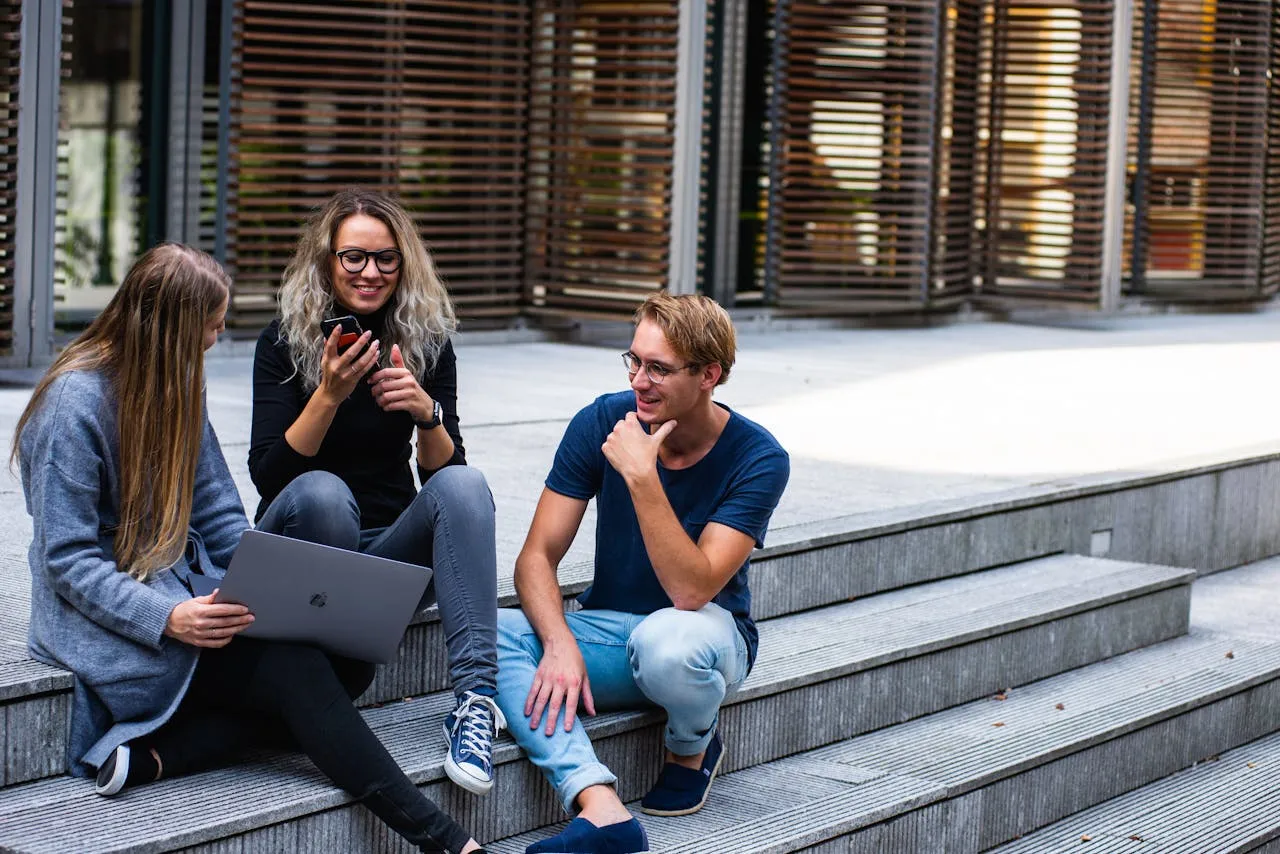
The fastest way to make local friends is language exchange. Kunming university students are eager to practice English, and many are happy to meet over coffee or dinner to trade conversation time. KCEL can connect you with language partners, and apps like Tandem and HelloTalk have active Kunming users.
International Community
Kunming has a small but established international community. Key gathering spots:
- Salvador’s Coffee House — the unofficial headquarters of Kunming’s foreign community. English-language events, open mic nights, and a noticeboard for housing and activities
- Moondog — craft beer bar popular with expats and students
- Green Lake Park — weekend afternoon hangout where language exchanges happen organically
- Online expat communities — multiple active communities for Kunming expats, organized by language and interests (English, Korean, Japanese, French)
Activities
Popular student activities beyond studying:
- Hiking the Western Hills and overlooking Dianchi Lake
- Exploring the Dounan flower market (Asia’s largest cut flower market)
- Rock climbing at the limestone cliffs 30 minutes from the city
- Cooking classes and food tours
- Volunteering at local community organizations
- Joining KCEL cultural excursions to ethnic minority villages and festivals
Weather and What to Pack
Kunming’s climate is its biggest selling point. Average temperatures by season:
| Season | Temperature | What to Expect |
|---|---|---|
| Spring (Mar-May) | 15-24°C / 59-75°F | Clear skies, pleasant. Best weather |
| Summer (Jun-Aug) | 18-25°C / 64-77°F | Rainy season — brief afternoon showers |
| Autumn (Sep-Nov) | 14-22°C / 57-72°F | Clear and comfortable. Second-best season |
| Winter (Dec-Feb) | 5-16°C / 41-61°F | Cool but sunny. Cold indoors (limited heating) |
Packing essentials:
- Layers — temperatures swing 10-15 degrees between morning and afternoon
- A good rain jacket for summer months
- Warm pajamas and a fleece for winter (most buildings lack central heating)
- Sunscreen and sunglasses — Kunming’s altitude means stronger UV than you expect
- Comfortable walking shoes — the city is best explored on foot
Your First Week in Kunming
Here is what a typical first week looks like for a new KCEL student:
Day 1-2: Arrive at Kunming Changshui Airport. KCEL can arrange airport pickup. Check into temporary accommodation (hotel or hostel). Rest, adjust to the time zone, explore the immediate neighborhood.
Day 3: KCEL orientation. Placement test to determine your Chinese level. Campus tour. Help with SIM card, bank account, and transit card setup. Introduction to classmates. If you are preparing for HSK exams, check KCEL’s HSK preparation program — certified Hanban teachers, personalized study plans, and a proven pass rate across all levels 1–6. Also read our HSK preparation guide to plan your study timeline.
Day 4: Classes begin. Typically 4 hours of Chinese instruction per day (morning sessions). Afternoon free for homework, exploration, and apartment hunting if you have not settled on housing. Not sure which program type to choose? Read our guide on how to choose the right Chinese program.
Day 5-7: Settle into routine. Find your preferred lunch spots. Walk the neighborhood. Start your first real conversations in Chinese — ordering food, asking for directions, negotiating prices at the market. If you are here for a shorter stay, consider KCEL’s Chinese Culture & Travel program — mornings in class, afternoons exploring Yunnan’s ancient towns, tea plantations, and ethnic minority villages.
By the end of week one, most students say the same thing: Kunming feels surprisingly easy to live in.
Ready to Start?
Living in Kunming as a student is not just affordable and safe — it is genuinely enjoyable. The city’s pace, climate, and culture create an environment where you can focus on what you came to do: learn Chinese.
If you are researching where to study Mandarin in China, read our complete guide to learning Chinese in Kunming, 2026 cost breakdown, and 10 reasons to choose Kunming for more practical details. Considering a university degree alongside language study? See our Kunming university Chinese language programs guide.
When you are ready, apply to KCEL — we handle visa support, housing assistance, and airport pickup so you can focus on the language from day one.
Start Your Kunming Experience
Small classes, experienced teachers, visa support, and housing help included. 1-on-1 programs start any Monday. Small Group cohort launches September 2026 — $15/class, 3–6 students.
Apply Now View ProgramsReady to start learning Chinese in Kunming?
Tell us your plan — no payment required now. We'll confirm your price within 24 hours.
Apply NowNo deposit required · Free to apply · Response within 24 hours