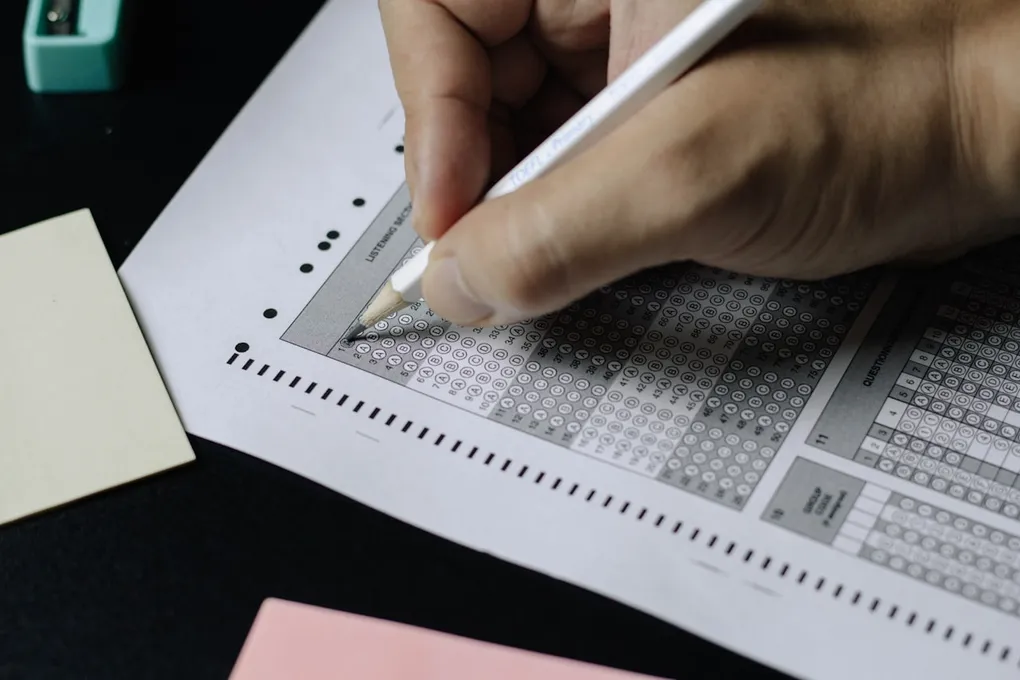
HSK Exam Preparation 2026: Study Plan + Free Resources
The HSK (Hanyu Shuiping Kaoshi) is China’s official standardized test for Mandarin Chinese proficiency. Whether you need it for university admission, a work visa, a scholarship application, or simply to measure your progress, passing the HSK is a concrete milestone that opens doors.
But many students waste months studying inefficiently — memorizing vocabulary lists without context, skipping listening practice, or targeting the wrong level. This guide gives you a clear preparation framework: what each level demands, how long it takes, which resources actually work, and how to structure your study for maximum results.
Best HSK prep resources for 2026, by need
- Official syllabus and test structure: Chinese Test Service Website — confirm the current format for your booked level
- Vocabulary (incl. HSK 3–4): Pleco dictionary + Anki spaced-repetition decks aligned with the official HSK syllabus
- Reading at your level: The Chairman's Bao and Du Chinese — graded articles tagged by HSK level
- Listening for the HSK 3→4 jump: Slow Chinese podcast and ChinesePod video lessons
- Writing (HSK 3+): Lang-8 / HiNative for native corrections, plus daily practice on past exam prompts
Free resources build knowledge, but the HSK 3-to-4 wall is where most self-study stalls. The fastest way through it is daily real-world practice — structured HSK training at KCEL in Kunming consistently moves students up a full level faster than the self-study timelines below.
Not sure which HSK level to target? Tell KCEL your current level and deadline. We will recommend a realistic HSK study plan and class schedule before you enroll.
Request a free HSK level assessment → or view HSK training options.
HSK in 2026: Levels 1-6 Plus the Advanced 7-9 Exam
HSK is now organized under a Three Stages, Nine Levels framework. That does not mean every test taker sits one new nine-level exam. The official 2026 calendar continues to list individual HSK Levels 1-6 test dates, while advanced candidates take a separate combined HSK Levels 7-9 exam.
For most learners, the practical rule is simple:
- If you register for HSK 1-6, prepare for the published structure of that exact level. HSK 1-2 test listening and reading; HSK 3-6 add writing.
- If you are an advanced academic or professional learner, HSK 7-9 is one combined exam covering listening, reading, writing, translation, and speaking.
- Use the current official syllabus rather than an old vocabulary deck labeled only “HSK 2.0” or “new HSK.” The transition terminology is inconsistent across third-party study sites.
Before building a study plan, check the official 2026 test calendar and the official page for your HSK level. The level-by-level plans below focus on HSK 1-6 because those are the exams most language students and university applicants currently book.
What the HSK Levels Actually Require
Understanding what each exam tests is the first step to efficient preparation. Most learners take HSK Levels 1-6, which assess increasingly complex language skills; the separate HSK 7-9 exam serves advanced candidates.
HSK 1-2: Foundation
| Level | Vocabulary | Skills Tested | Pass Score | Time to Prepare |
|---|---|---|---|---|
| HSK 1 | 150 words | Listening + Reading | 120/200 | 2-3 months (part-time) |
| HSK 2 | 300 words | Listening + Reading | 120/200 | 3-5 months (part-time) |
HSK 1 and 2 have no writing section. You need to recognize characters, not write them from memory. The listening section uses slow, clearly articulated speech with short sentences.
What catches people off guard: The listening section accounts for 50% of your score. Students who only study reading will fail. You need regular exposure to spoken Mandarin — not just textbook audio, but real-world listening practice.
HSK 3-4: Intermediate
| Level | Vocabulary | Skills Tested | Pass Score | Time to Prepare |
|---|---|---|---|---|
| HSK 3 | 600 words | Listening + Reading + Writing | 180/300 | 4-8 months |
| HSK 4 | 1,200 words | Listening + Reading + Writing | 180/300 | 8-14 months |
HSK 3 introduces writing — you need to construct sentences and short paragraphs. HSK 4 is the level most Chinese universities require for admission and most employers consider “functional Chinese.”
The HSK 3-to-4 jump is the hardest. Vocabulary doubles from 600 to 1,200 words, and the writing section expects connected paragraphs, not just individual sentences. Many students hit a plateau here. This is where immersion study provides its biggest advantage — you encounter HSK 4 vocabulary naturally in daily life instead of drilling flashcards.
HSK 5-6: Advanced
| Level | Vocabulary | Skills Tested | Pass Score | Time to Prepare |
|---|---|---|---|---|
| HSK 5 | 2,500 words | Listening + Reading + Writing | 180/300 | 14-24 months |
| HSK 6 | 5,000+ words | Listening + Reading + Writing | 180/300 | 24-36+ months |
HSK 5 is the standard for Chinese government scholarships and professional roles. HSK 6 represents near-native comprehension. At these levels, you need to understand Chinese media, write formal essays, and comprehend rapid native-speed speech.
Reality check: HSK 5-6 preparation is rarely achievable through self-study alone. The vocabulary is too specialized and the listening speed too fast to master without regular interaction with native speakers. Students preparing for these levels benefit most from intensive programs with immersion.
Realistic Study Timelines
These timelines assume consistent daily study. Irregular study (cramming on weekends, skipping weeks) adds 30-50% to these estimates.
Self-Study at Home (8-10 hours per week)
| Target Level | Starting from Zero | Starting from Previous Level |
|---|---|---|
| HSK 1 | 2-3 months | — |
| HSK 2 | 4-6 months | 2-3 months |
| HSK 3 | 8-12 months | 3-5 months |
| HSK 4 | 14-20 months | 5-8 months |
| HSK 5 | 24-30 months | 8-12 months |
| HSK 6 | 36-48 months | 12-18 months |
Full-Time Immersion in China (20+ hours per week)
| Target Level | Starting from Zero | Starting from Previous Level |
|---|---|---|
| HSK 1 | 1-2 months | — |
| HSK 2 | 2-3 months | 1 month |
| HSK 3 | 3-5 months | 1-2 months |
| HSK 4 | 6-9 months | 2-4 months |
| HSK 5 | 12-18 months | 4-8 months |
| HSK 6 | 20-30 months | 8-12 months |
The difference is not just about study hours. When you study Chinese in China, every meal, every taxi ride, every conversation with your landlord is practice. This ambient immersion is why students studying in Kunming often beat these timelines — the language surrounds you 16 hours a day, not just during study sessions.

The Study Plan: What to Do at Each Level
HSK 1-2 Study Plan (Beginner)
Daily routine (1.5-2 hours):
-
Vocabulary review (20 min): Use spaced repetition (Anki or Pleco flashcards) to review the official HSK word list. Learn 5-10 new words per day. Focus on recognition, not recall — you need to understand these words when you hear or see them.
-
Listening practice (30 min): Listen to HSK-level audio materials. Start with the official HSK Standard Course textbook audio. Progress to slow-speed Chinese podcasts. The goal is to understand complete sentences, not just isolated words.
-
Reading practice (20 min): Read the HSK textbook dialogues. Then read them again without pinyin. Character recognition builds slowly — repetition is the only path.
-
Practice tests (30 min, twice per week): Take timed practice sections from official past exams. This builds test stamina and reveals weak areas you might not notice during casual study.
Key resources for HSK 1-2:
- Official HSK vocabulary list (free from hanban.org)
- HSK Standard Course textbook series (the exam is based on these)
- Pleco dictionary app — look up every word you encounter
- HelloChinese app — gamified but surprisingly effective for HSK 1-2 vocabulary
Common mistake: Spending all your time on vocabulary flashcards and ignoring listening. The listening section is half your score. If you cannot understand spoken Mandarin at natural speed, vocabulary knowledge alone will not save you.
HSK 3-4 Study Plan (Intermediate)
Daily routine (2-3 hours):
-
Vocabulary + Grammar (30 min): Continue spaced repetition for new vocabulary. At this level, learn words in context (full sentences) rather than in isolation. Add grammar patterns — HSK 3-4 introduces complex structures like result complements, directional complements, and conditional sentences.
-
Listening practice (40 min): Upgrade to native-speed content. Chinese TV shows with Chinese subtitles, news clips from CCTV, or podcasts at natural speed. Pause and replay sections you do not understand. At HSK 3-4, you need to handle connected speech, not just textbook dialogues.
-
Reading comprehension (30 min): Read Chinese articles, simplified news, or graded readers at your level. Practice reading for main ideas — the HSK reading section tests comprehension, not translation. Can you answer a question about a paragraph without understanding every single word?
-
Writing practice (20 min): Write short paragraphs about your day, opinions, or the topics in your textbook. HSK 3 writing is sentence construction from given words. HSK 4 writing requires rewriting sentences and composing short essays from picture prompts.
-
Mock exams (weekly): Take one full-length practice test per week under timed conditions. Review every wrong answer — understand why the correct answer is correct.
Key resources for HSK 3-4:
- HSK Standard Course 3-4 textbooks with workbooks
- The Chairman’s Bao — graded news articles at HSK levels
- Du Chinese — graded reading app with built-in dictionary
- YouTube: Mandarin Corner (native-speed videos with HSK-level vocabulary)
The plateau problem: HSK 3-4 is where most self-study students stall. Your vocabulary is large enough to feel comfortable in familiar contexts but too small for new situations. The solution is to increase your input variety — read about topics you have never studied, listen to speakers with different accents, and force yourself into conversations where you cannot rely on memorized phrases.
This is exactly where studying Chinese in Kunming provides its biggest advantage. You cannot avoid new situations when you live in a Chinese city — every day forces you to use language in contexts your textbook never covered.
Best Resources for HSK 4 Preparation in 2026
HSK 4 is the level where “knowing words” stops being enough. You need enough reading speed to finish the paper, enough listening stamina to follow longer dialogues, and enough writing control to put grammar patterns into clear sentences. The best HSK 4 preparation resources in 2026 are the ones that train those skills together.
| Need | Best resource | How to use it |
|---|---|---|
| Official scope | Chinese Test Service Website + current syllabus | Confirm the vocabulary, grammar, and test format for the exact HSK 4 exam you registered for. |
| Structured course | HSK Standard Course 4 textbook and workbook | Work one unit at a time; finish every listening and writing exercise, not just the vocabulary list. |
| Vocabulary memory | Pleco or Anki | Review HSK 4 words daily with example sentences, not isolated English translations. |
| Reading speed | Du Chinese or The Chairman’s Bao | Read one HSK 4-level article per day and summarize it in Chinese in 3-5 sentences. |
| Listening | ChinesePod, Slow Chinese, and HSK 4 mock audio | Alternate slow input for accuracy with timed exam audio for speed. |
| Writing | Teacher feedback or native correction apps | Get corrections on sentence-order, complement, and conjunction mistakes before they become habits. |
| Exam stamina | Full timed mock papers | Take one complete mock exam every 1-2 weeks, then rebuild your study plan from the mistakes. |
If you are stuck around HSK 3 and trying to reach HSK 4, prioritize writing and listening earlier than feels comfortable. Most students fail to move up because they keep adding flashcards while avoiding the two sections that expose weak grammar. KCEL’s HSK preparation classes focus on those exact gaps: timed practice, teacher-corrected writing, and daily speaking pressure in Kunming.
HSK 5-6 Study Plan (Advanced)
Daily routine (3-4 hours):
-
Extensive reading (60 min): Read Chinese newspapers, magazine articles, and novels. The goal is volume — read fast, look up only words that block comprehension. HSK 5-6 vocabulary is too large to learn word by word. You absorb it through massive reading exposure.
-
Intensive listening (45 min): Watch Chinese news, documentaries, talk shows, and lecture recordings without subtitles. Take notes in Chinese. If you understand less than 70%, switch to something slightly easier — the goal is comprehension practice, not frustration.
-
Essay writing (30 min): Write 300-500 character essays on current events, abstract topics, or HSK writing prompts. Have a teacher or language partner review your work. At HSK 5-6, writing quality matters — grammar accuracy, varied sentence structures, and logical organization.
-
Vocabulary in context (30 min): Focus on formal vocabulary, idioms (chengyu), and academic language. These appear frequently in HSK 5-6 reading passages and are rarely encountered in casual conversation.
-
Mock exams (bi-weekly): Full-length timed exams. At HSK 5-6, time management becomes critical — the reading section is long and the pace is demanding.
Key resources for HSK 5-6:
- Chinese newspapers online (Xinhua, People’s Daily)
- Online Chinese news and educational platforms
- CCTV documentaries on YouTube
- Past HSK 5-6 exams (available from test centers and online bookstores)
Free Resources That Actually Work
Not all free resources are equal. Here are the ones worth your time, organized by skill:
Vocabulary and Flashcards
- Pleco (iOS/Android) — The best Chinese dictionary. Free version includes flashcard system with spaced repetition. Essential at every level.
- Anki (desktop free, mobile paid) — Customizable spaced repetition. Download pre-made HSK decks or build your own. The effort of making your own cards is itself a study activity.
- Official HSK vocabulary lists — Available free from hanban.org. Print them, check off words you know, and focus study time on gaps.
Listening
- HSK Online (hsk.hanban.org) — Official practice platform with mock listening tests.
- Slow Chinese podcast — Clear, slow Mandarin on Chinese culture topics. Perfect for HSK 3-4 transition.
- ChinesePod (YouTube) — Free video lessons at multiple levels. The dialogues are more natural than most textbook audio.
Reading
- The Chairman’s Bao — Chinese news articles graded by HSK level. Free tier available. Excellent for building reading speed at your current level.
- Du Chinese — Graded reading app. Tap any word for a definition. Tracks your vocabulary growth.
- Chinese text analyser tools — Paste any Chinese text and see which HSK level it corresponds to. Useful for finding reading material at the right difficulty.
Writing
- Lang-8 / HiNative — Write in Chinese, get corrections from native speakers.
- Practice with past exam prompts — HSK writing prompts are publicly available. Write one per day and compare with model answers.
Comprehensive
- HelloChinese — Best free app for complete beginners (HSK 1-2). Gamified but covers real HSK content.
- Coursera/edX — Free Chinese language courses from Peking University, Tsinghua, and others. Structured but self-paced.
For a detailed comparison of the best apps and how to combine them into a daily study routine, see our guide to Chinese language learning apps.
Why Immersion Study Beats Self-Study for HSK
The data is clear: students who prepare for HSK in China pass faster than those who self-study at home. Here is why.
Listening comprehension requires volume. The HSK listening section tests your ability to understand spoken Chinese at natural speed. You cannot build this skill from textbook audio alone. Living in China gives you hours of passive listening input every day — conversations around you, announcements on public transit, interactions at shops and restaurants. This ambient exposure trains your ear to process Chinese at the speed it is actually spoken.
Writing requires thinking in Chinese. At HSK 4 and above, the writing section tests your ability to construct coherent Chinese prose — not translate from your native language. Students who live in China develop an internal Chinese voice faster because they use the language for real communication daily. When you have been conversing with your Chinese friends regularly throughout the week, writing an HSK essay feels natural rather than labored.
Vocabulary sticks when you use it. Flashcard vocabulary has a high decay rate — you forget words you memorize in isolation. But a word you learn because you needed it to order dinner, explain your symptoms to a pharmacist, or negotiate rent becomes permanent. Immersion creates hundreds of these high-retention vocabulary moments daily.
At KCEL in Kunming, HSK preparation combines 1-on-1 private instruction with full immersion. Your teacher provides exam technique, grammar coaching, and a personalised study plan, while Kunming’s daily life provides the real-world practice that cements everything. The cost is significantly lower than studying in Beijing or Shanghai, which means you can afford to study longer — and study duration is the single biggest predictor of HSK success.
Exam Day Tips
Once you have prepared, these strategies help you maximize your score on exam day:
-
Do the listening section with full attention. Each recording plays only once (HSK 3-6) or twice (HSK 1-2). If you miss a question, move on immediately. Dwelling on a missed answer causes you to miss the next one.
-
Read the questions before the audio plays. You have a few seconds before each listening section begins. Use that time to read the answer choices — this tells you what to listen for.
-
In reading, answer based on the text, not your knowledge. The HSK tests whether you understood the passage, not whether you know the topic. Even if you know the “real” answer, pick the one supported by the text.
-
For writing, keep it simple. HSK 3-4 writing rewards accuracy over complexity. Use grammar structures you are confident in rather than attempting advanced patterns that risk errors. At HSK 5-6, you need to show range — but clarity still beats complexity.
-
Time management: The reading section is where most students run out of time. Practice reading passages quickly and answering immediately — do not re-read the entire passage for each question.
What Comes After HSK?
Passing your target HSK level is not the end — it is a door to the next stage:
- HSK 4+: You can apply to most Chinese university programs in Kunming, qualify for many jobs requiring Chinese, and communicate effectively in professional settings.
- HSK 5+: You qualify for Chinese government scholarships, can work in Chinese-medium environments, and can consume Chinese media without assistance.
- HSK 6: You can pursue graduate study in Chinese, work as a translator, or operate at a near-native level in professional and academic contexts.
Many students who pass HSK 4 at KCEL continue to HSK 5-6 because they realize how much more they can achieve with deeper fluency. If you are deciding between intensive and part-time study, or weighing different school options, our guide to choosing the right Chinese program walks through the key factors. The investment in Chinese language compounds over a lifetime — in career opportunities, cultural understanding, and personal connections.
Start Your HSK Preparation
Whether you are a complete beginner or targeting HSK 5-6, the path to passing the HSK starts with a realistic plan and consistent daily practice.
If you want to accelerate your preparation through immersion, KCEL in Kunming offers dedicated HSK preparation courses at all levels — 1-on-1 coaching and the immersive environment of a Chinese city where your daily life becomes your practice ground.
The cost is lower than you think. Many students budget $800-1,200 per month for tuition, accommodation, food, and everything else — less than half the cost of studying in Beijing or Shanghai. Read our guide to living in Kunming to see what daily student life looks like.
Ready to start learning Chinese in Kunming?
Tell us your plan — no payment required now. We'll confirm your price within 24 hours.
Apply NowNo deposit required · Free to apply · Response within 24 hours