Why Study Chinese in Kunming? 10 Reasons to Skip Beijing
Every year, thousands of international students head to China to learn Mandarin. Most default to Beijing or Shanghai — the cities they have heard of. But experienced language learners and long-term students increasingly choose Kunming, the capital of Yunnan province in southwest China.
Why? Because Kunming solves the problems that derail Chinese study in bigger cities: pollution, cost, overstimulation, and the English bubble. Here are 10 reasons Kunming is one of the best places in China to learn Chinese. For a full city-by-city breakdown, see our guide to studying Chinese in China — Kunming vs Beijing vs Shanghai vs Chengdu vs Xi’an.
1. Clean Air You Can Actually Breathe
Beijing’s air quality makes international headlines for good reason. Students there regularly check AQI apps before deciding whether to go outside. Shanghai is better but still suffers poor air days, especially in winter.
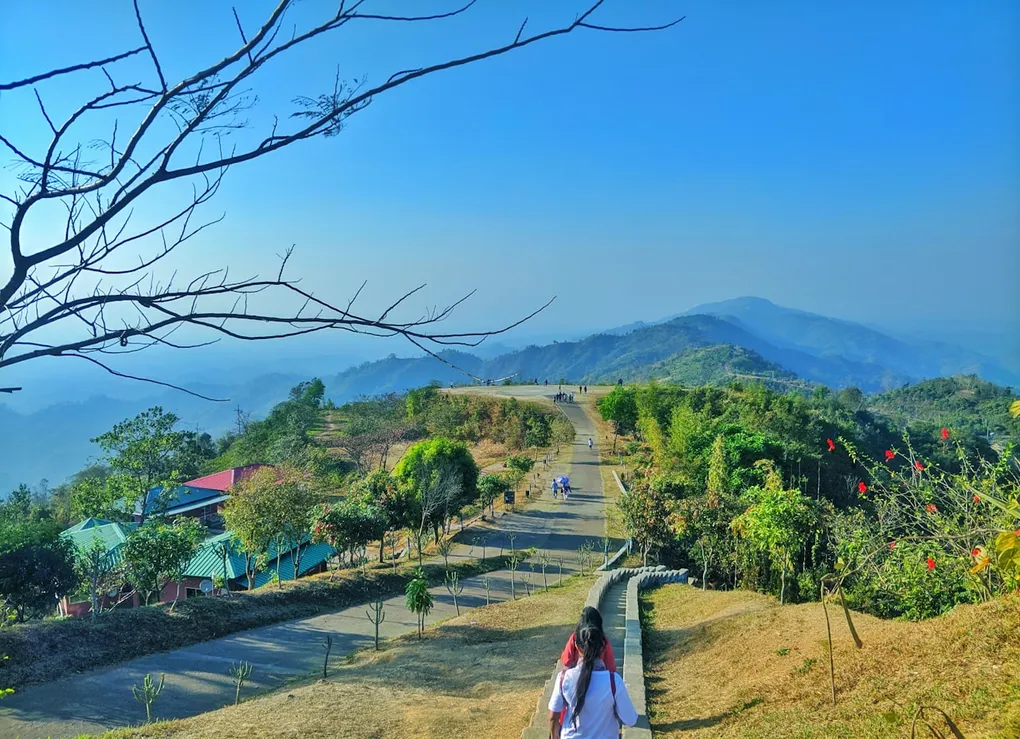
Kunming sits at 1,900 meters elevation on the Yunnan-Guizhou Plateau. The altitude, consistent wind patterns, and distance from heavy industry give it some of the cleanest air of any major Chinese city. The AQI regularly sits below 50 — in the “Good” range.
This matters for study. Poor air quality causes headaches, fatigue, and reduced concentration. When you are spending 4-6 hours a day in intensive Chinese classes, you need your brain working at full capacity. Kunming’s air lets you study outdoors in parks, walk to class without a mask, and sleep with your windows open.
2. Year-Round Spring Weather
Kunming is called the “Spring City” (春城, Chūnchéng) because temperatures stay between 15-24°C (59-75°F) for most of the year. No brutal winters. No sweltering summers. No seasonal depression.
Beijing drops below -10°C in winter and pushes past 35°C in summer. Shanghai’s summers are infamous for their humidity. Both cities force students indoors for months at a time, limiting the informal practice that happens at restaurants, markets, and parks.
In Kunming, you can study in a park in January. You can practice ordering food at outdoor restaurants in December. The weather never becomes a barrier to getting out and using your Chinese in real situations — and that daily real-world practice is what separates students who achieve fluency from those who plateau.
3. Lower Cost = Longer Study = Better Results
The single biggest factor in Chinese fluency is time. Three months gets you survival Chinese. Six months gets you conversational. Twelve months gets you genuinely functional.
Kunming’s cost of living is 30-50% lower than Beijing or Shanghai. A month of intensive study at KCEL — tuition, accommodation, food, and daily expenses — runs roughly $800-1,200 USD. The same setup in Beijing costs $1,800-2,500.
That difference compounds. A student with a $10,000 budget can study for 3-4 months in Beijing or 8-10 months in Kunming. The Kunming student will achieve significantly better Chinese — not because the teaching is different, but because they had twice the time to learn.
4. Real Immersion: Fewer English Speakers
Shanghai has a massive expat community. Beijing’s university district is full of international students who socialize in English. It is entirely possible to live in either city for months without ever needing to speak Chinese.
Kunming has a small but welcoming international community — large enough that you will not feel isolated, but small enough that English is not a default language anywhere. At restaurants, shops, the metro, the hospital, the bank — you will need Chinese. Every errand becomes a language lesson.
This is the immersion advantage. When speaking Chinese is not optional but necessary, you learn faster. Your brain shifts from treating Chinese as an academic subject to treating it as a survival tool. That shift is where real progress happens.
5. A City That Does Not Overwhelm You
Shanghai has 26 million people. Beijing has 22 million. The pace, noise, crowds, and complexity of daily life in Chinese megacities can be exhausting — especially when you are simultaneously trying to learn a language.
Kunming has around 7 million people. It has modern infrastructure — a metro system, international airport, good hospitals, reliable internet — but at a manageable scale. You can walk to most things you need. Rush hour exists but does not crush you. The pace allows you to process what you are learning instead of just surviving each day.
Many students report that the reduced cognitive load of living in a mid-sized city frees up mental energy for language acquisition. When daily life does not exhaust you, you have more capacity for study. For a detailed look at neighborhoods, food, and daily logistics, see our guide to living in Kunming as a student.
6. Gateway to Yunnan and Southeast Asia
Kunming sits at the crossroads of China and Southeast Asia. During semester breaks or long weekends, you can travel to:
- Dali and Lijiang — ancient towns in the Yunnan highlands (4-5 hours by train)
- Shangri-La — Tibetan culture on the edge of the Himalayas
- Xishuangbanna — tropical rainforest region bordering Laos and Myanmar
- Vietnam, Laos, Thailand — all accessible by train or short flights from Kunming
The new China-Laos Railway runs directly from Kunming to Vientiane. Flights to Bangkok, Hanoi, and Chiang Mai are cheap and frequent.
This geographic advantage means your Chinese study is not isolated — it is embedded in a region where you can use your language skills across borders. Many students combine their Kunming language program with travel that reinforces what they learn in the classroom. KCEL’s Culture & Travel program is specifically designed for this — mornings in class, afternoons exploring Yunnan, no student visa needed.
7. Standard Mandarin, Not a Regional Dialect Problem
A common concern: “Will I learn the local dialect instead of standard Mandarin?”
No. Language schools in Kunming teach exclusively in standard Mandarin (普通话, Pǔtōnghuà). KCEL’s teachers are certified Chinese language instructors who teach standard pronunciation and grammar.
While a Kunming dialect (昆明话) exists, it is closer to standard Mandarin than Cantonese, Shanghainese, or even some Beijing-dialect features (like the heavy “er” suffix that Beijing Mandarin adds to everything). Younger Kunming residents overwhelmingly speak standard Mandarin in professional and social settings.
In practice, this means the Chinese you learn in class matches the Chinese you hear on the street — which is not always the case in Guangzhou, Shanghai, or even parts of Beijing.
8. University Pathways After Language Study
Kunming is not a dead end. It is a starting point.
Yunnan has several major universities — Yunnan University, Kunming University of Science and Technology, Yunnan Normal University — that accept international students for degree programs. Students who complete language study at schools like KCEL can transition into undergraduate or graduate programs.
KCEL’s scholarship and university pathway program connects language students with admission support for Yunnan universities. University admission typically requires HSK 4 or higher — KCEL’s dedicated HSK preparation program builds exam-ready proficiency with certified Hanban teachers and proven pass rates. For students who arrive planning to learn Chinese and discover they want to stay longer, this pathway exists.
This matters because many students do not know what comes after language study until they are in the middle of it. Kunming gives you options that keep you in a city you already know, at a cost you can sustain.

9. A Food Culture That Keeps You Exploring
Yunnan cuisine is one of China’s most diverse — influenced by the province’s 25 ethnic minority groups and its proximity to Southeast Asia. You will encounter flavors and dishes that do not exist anywhere else in China.
Daily food practice is also language practice. Ordering from a menu with no English, asking the vendor at a street stall what is in each dish, negotiating prices at the wet market — these interactions happen three times a day and build practical Chinese faster than any textbook.
A meal at a local restaurant costs ¥15-30 ($2-4 USD). Street food runs ¥5-15. You will eat better for less than in any other major Chinese city, and every meal is a conversation.
10. Sustainable Pace for Long-Term Study
Intensive language study is mentally demanding. Students in high-pressure environments burn out. They skip classes, stop practicing, retreat into English-language entertainment, and leave earlier than planned.
Kunming’s combination of good weather, affordable living, manageable city size, and relaxed culture creates conditions where students can sustain intensive study for months. You can establish a routine: morning classes, afternoon review at a tea house, evening conversation practice with friends, weekend trips to nearby towns. The routine does not feel like a grind because the city supports it.
This is Kunming’s real advantage. Not any single factor, but the combination: clean air + low cost + real immersion + good weather + manageable pace. Together, they create a city where you can study Chinese seriously for as long as it takes — and that time is what produces fluency.
Ready to Study Chinese in Kunming?
KCEL has been teaching Chinese to international students in Kunming since 1999 — the longest-running Chinese language school in Yunnan. We offer 1-on-1 private lessons across all levels — Intensive, HSK Preparation, and Culture & Travel programs — with flexible start dates year-round.
- Try a free trial class before you commit
- Visa support included — we issue your School Admission Letter for X2 visa application
- Visa support — School Admission Letter for X2 student visa applications
Apply Now → or explore our complete guide to learning Chinese in Kunming for everything you need to know before you arrive. Preparing for the HSK? See our HSK study plan and resources guide.